A Green Way
Why traffic-free, self-carry cycling without a support vehicle is the way of the future
It was a sunny spring evening in late May, and I felt the familiar urge to get on the bike and disappear for a while. I loaded up Komoot, pieced together a triangular route through the Yorkshire Wolds, and headed for the hills.
As I rolled onto the singletrack at the start of the route, two things stopped me in my tracks. Firstly, the beauty of the place — standing at a vantage point, looking down across the Vale of York, the landscape unfolding quietly beneath me. And secondly, the wind turbines. Dozens of them lining the ridgeline, turning steadily, feeding clean energy into the region.
This part of Yorkshire is famously windy and considered the wind energy capital of the UK. Air sweeps in from the west, funnels through the vale, and surges up the hills into East Yorkshire. Riding along the ridge that evening, I was blown from side to side by the sheer force of it. It was immediately obvious why this was such a strategic location for renewable energy.
Riding alone in that setting gave me time to think. And somewhere between the wind, the turbines, and the empty trail, things clicked.
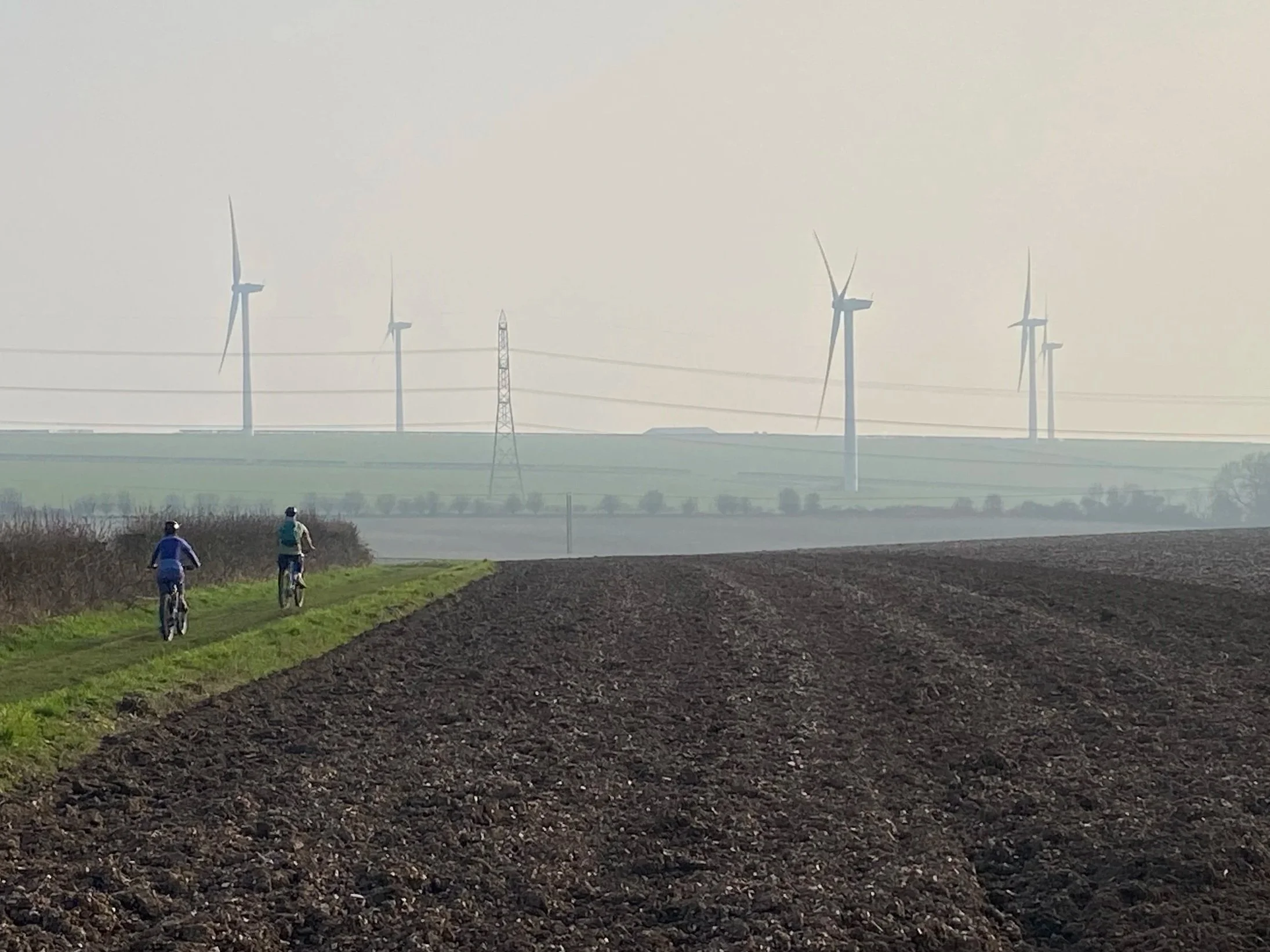
The Wolds Way cycling trail - East Yorkshire
Over the years, we’ve formed strong values as a company. What began as fairly standard sightseeing bike tours with a support vehicle has evolved into something very different. Today, we run fully guided, traffic-free, self-carry cycling tours across Europe — supported by two guides, but powered entirely by the group. No van with its engine idling nearby.
Just people, bikes, and the route ahead.
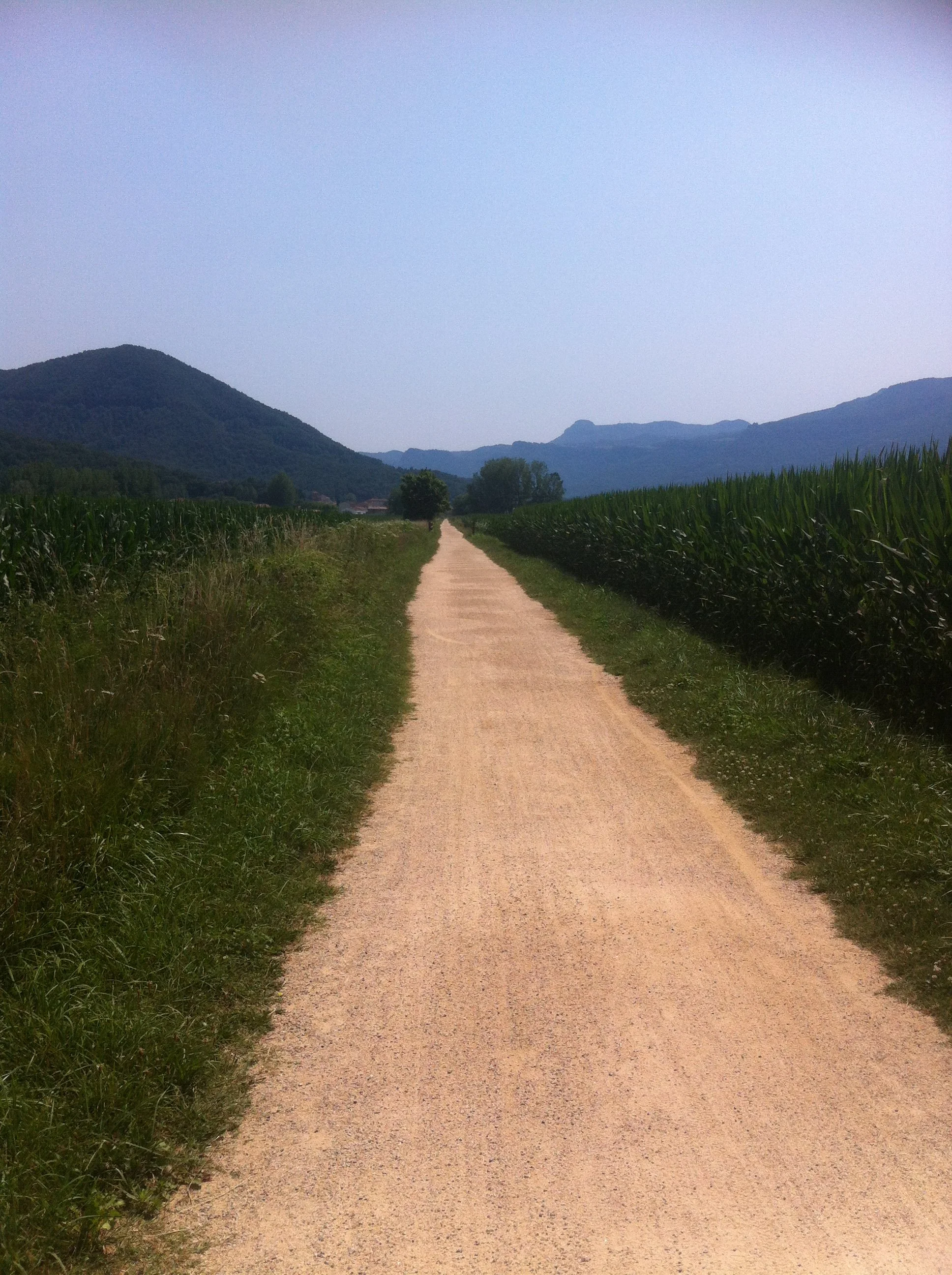
The Vies Verde - Olot, Spain (in 2016)
I remember when this all started. A good friend of mine, Kelvin — who is still one of our guides today — invited me to join him on a bike touring trip along the Vies Verdes in Catalonia. He was so enthusiastic about the region, the route and this different way of riding: exploring new places with nothing but two wheels beneath you and everything you needed carried with you. No cars. No support vehicle. No daily logistics of meeting a van to collect your luggage. Just the pure freedom to ride where you wanted, on the best traffic-free trails you could find. I still remember leaving the old city of Olot, rolling out onto the greenway and riding beneath a canopy of trees before emerging into a wide open valley. Mountains rose on either side. The air felt cooler, cleaner. Just two friends finding themselves in nature accompanied by the sound of wheels eating up gravel. Riding this way invites people to disconnect from routine and reconnect with themselves through slow, self-powered travel — while being as climate-conscious as possible. In many ways, the turbines above me felt like a perfect metaphor: quiet, efficient, forward-thinking, and completely self-sufficient.
Riding that greenway, with the valley below and the wind fans towering above, was a moment of inspiration. Our philosophy has become about connection — connection with yourself, with others, and with nature. To create that, you sometimes have to strip things back.
That’s why we ride as many greenways, rail trails, and traffic-free paths as possible. It’s why we carry everything we need in panniers from one hotel to the next along the journey. It’s why we chose to remove the support vehicle altogether. And it's why we embed wellness into our tours - to stop, reflect and reconnect.
Self-carry touring teaches you to be resourceful. It makes you conscious of what you actually need — and what you don’t. The reality is, you need no more than around 15 items of clothing for a seven-day ride. When you slow the pace, stop chasing distance records, and allow yourself to take in your surroundings, the idea of a support vehicle quickly starts to feel unnecessary.
We made this decision with three clear aims:
To help guests disconnect from everyday life and reconnect with nature.
To create a genuine sense of freedom — it’s just you, your bike, and people who quickly become friends.
And to reduce our environmental impact in a meaningful way.
When people put their minds to it, it’s completely possible for a relatively novice rider with a good baseline fitness to complete a multi-day bike tour carrying their own belongings. With the growing popularity of e-bikes, it’s more accessible than ever. We often cover around 400km in a week using nothing but our bikes and panniers, staying in a hotel each night.
Yes, it has raised a few eyebrows. But as I looked up at those turbines turning steadily above me, it felt clear that we were on the right track.
The biggest concern people raise is the lack of a “safety net”. There’s a perception that removing the support vehicle somehow reduces value or increases risk. In our experience, the opposite is true. There’s immense satisfaction in carrying your own kit. Stepping away from the comfort of a van actually creates a deeper sense of connection — with the landscape, the group, and the journey itself. Without an engine following you, your options expand. Trails, bike paths, railways — places cars simply can’t go. “Roads? Where we’re going, you don’t need roads.”
Your experience of nature is amplified. The air is cleaner. The noise disappears. And you become part of a wider cycling community that exists entirely off-road. Some of the best cafés, conversations, and shared stories we’ve encountered live on these trails. Places like Stazione di Chiusaforte rail trail cafe on the Alpe Adria route — gems designed for cyclists, by cyclists.
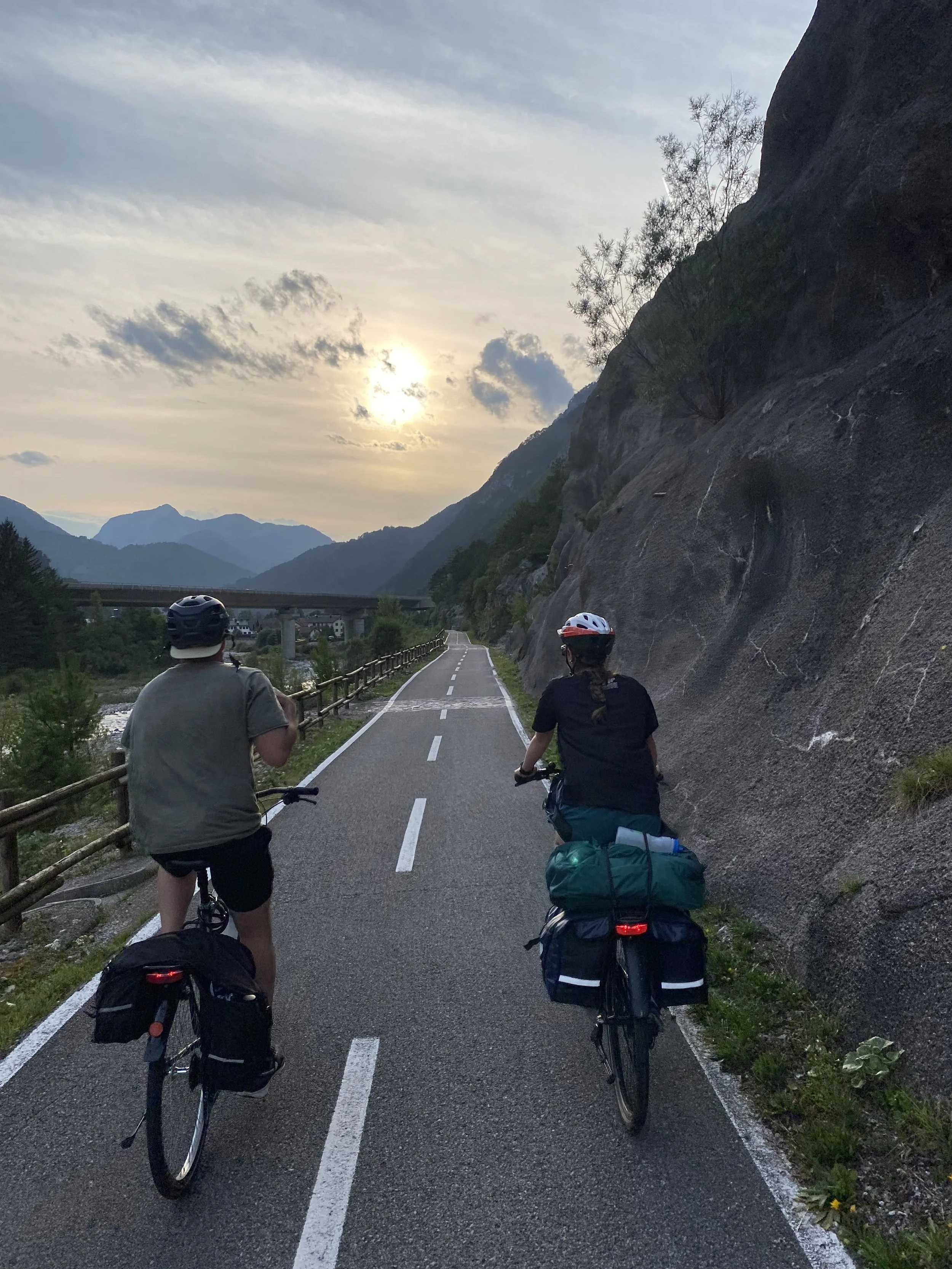
Alpe Adria trail near Chiusaforte
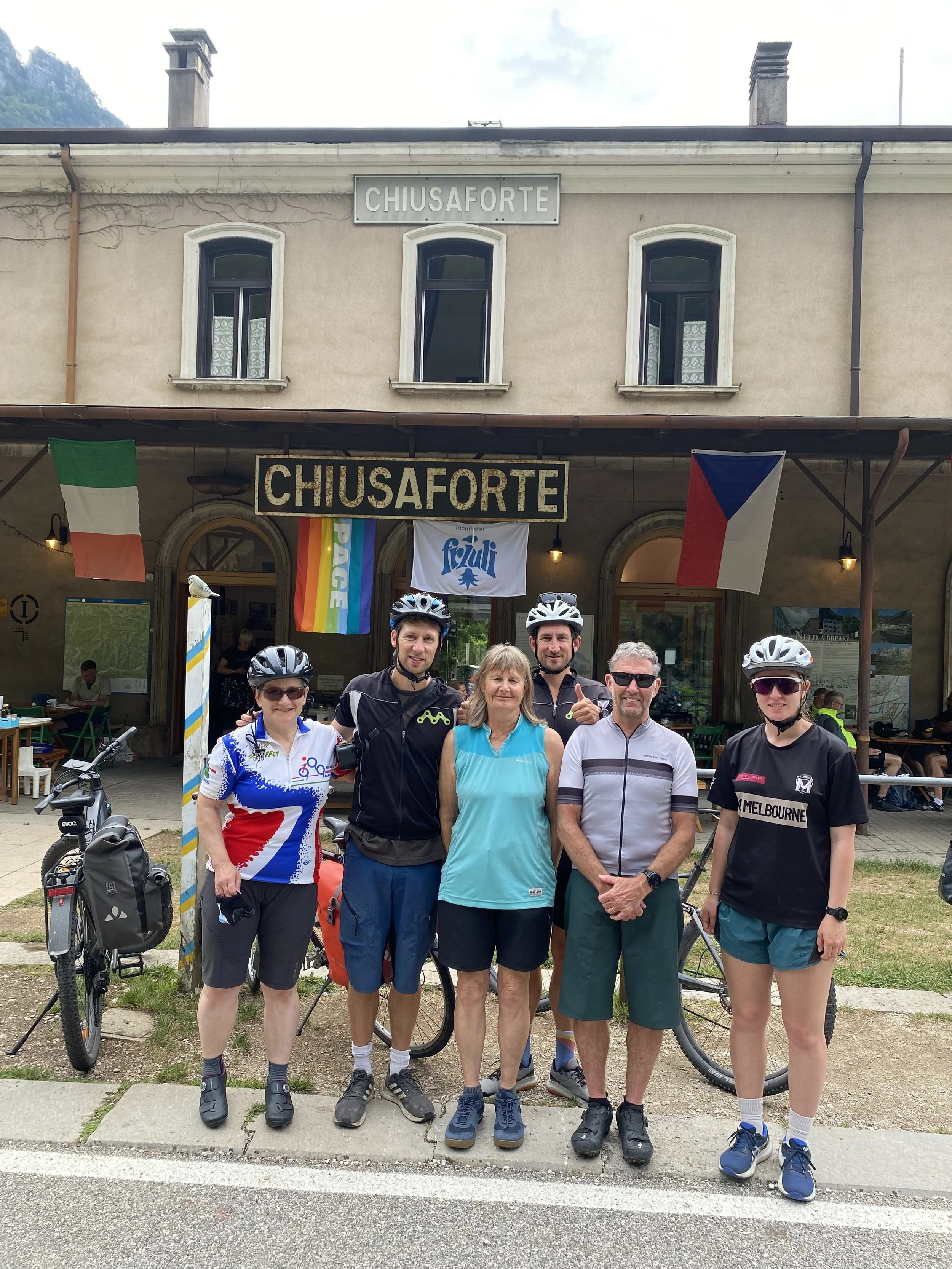
Stazione di Chiusaforte
As a group, we also see something else happen. Without a support vehicle, people support each other. The shared effort creates a stronger bond and a deeper sense of accomplishment.
Of course, carrying extra weight makes climbing harder. That’s undeniable. But what you lose on the climbs, you gain on the flats and descents. With reasonable fitness and a bit of determination, most people have no issue completing our tours. Fewer than 5% of participants haven’t finished a tour — and usually a small increase in baseline fitness or a change in self belief is all that’s needed.
The question we’re asked most often is: “How am I going to fit everything into two panniers for a week?”
The answer is simple. You don’t need much. Once you experience the freedom of travelling light, it’s hard to go back. For our tours, we supply resources on how to effectively pack a pannier for a multi-day bike tour.
The next day, I returned to that same greenway — this time with my four-year-old son. He’s obsessed with wind turbines, or “wind fans” as he calls them. We counted them together: one, two, three… all the way to eleven.
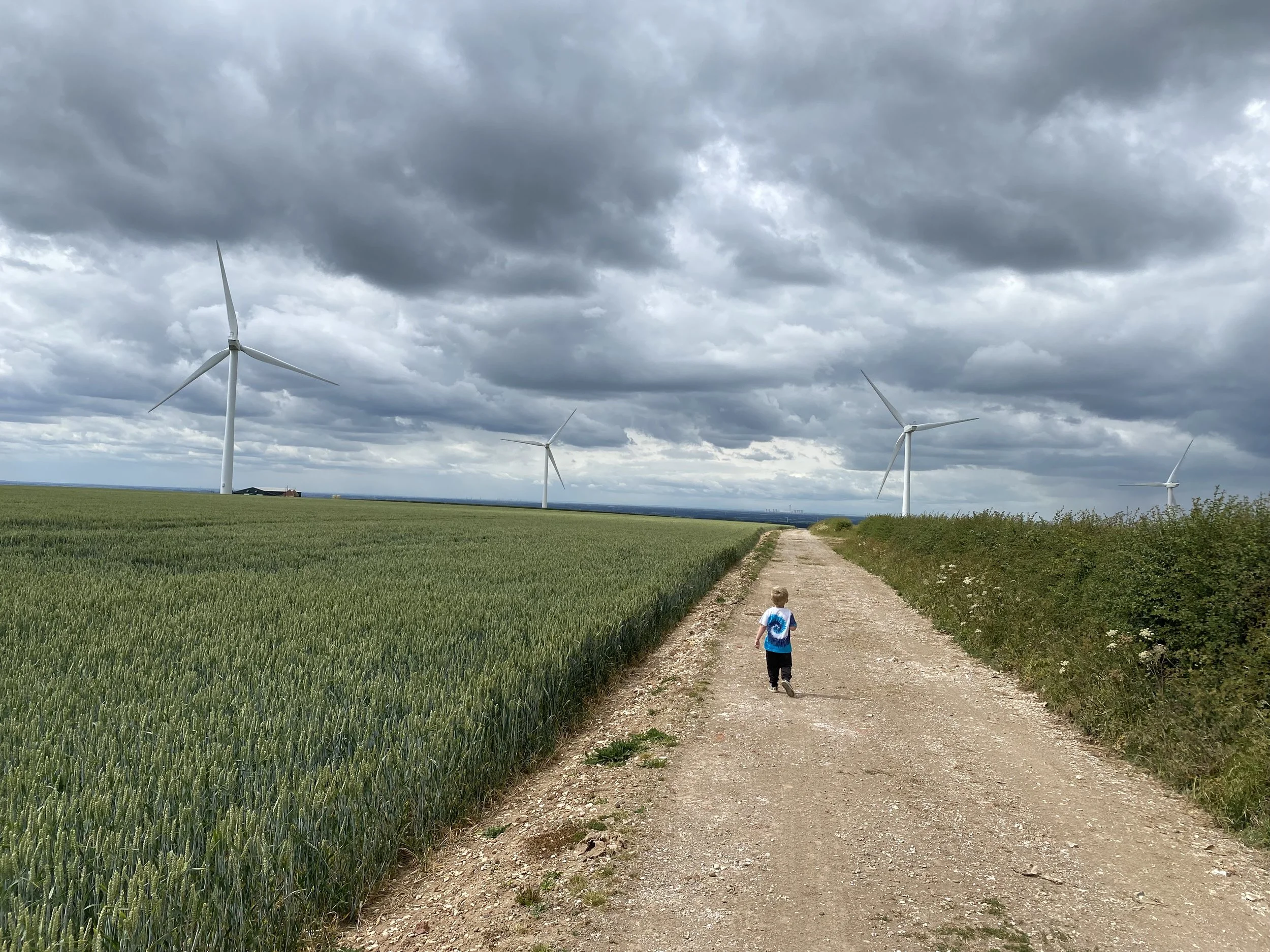
Standing there with him, watching those turbines turn, I felt hopeful. Not just because they represent a greener future, but because they stand for something deeper: self-sufficiency, resilience, and quiet progress.
That’s exactly how self-carry bike touring feels. It asks a little more of you — and in return, it gives you a lot more back. More enjoyment. More presence. More pride in what you’ve achieved.
There’s something deeply satisfying about reaching the end of a multi-day tour knowing you carried everything you needed, travelled lightly across the land, and shared the journey with others every step of the way. The tired legs, the final café stop, the sense of “we did this” — it stays with you long after the ride ends.
Yes, it’s a greener way forward. But it’s also a more joyful one - and ultimately, a more human way to travel.
Post by Alex Morphet